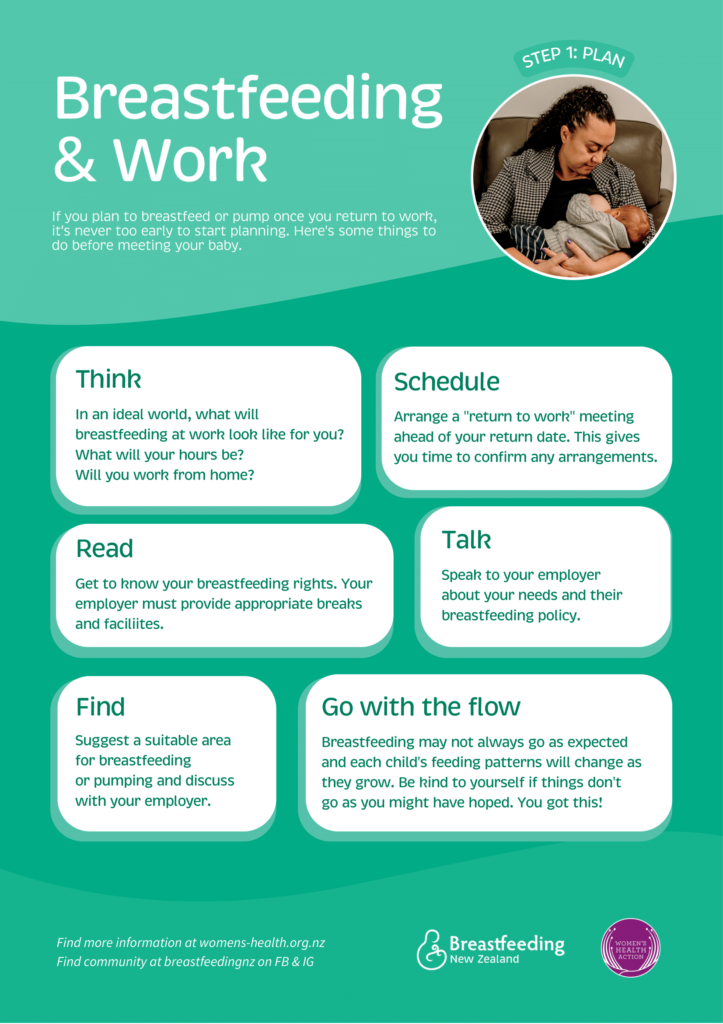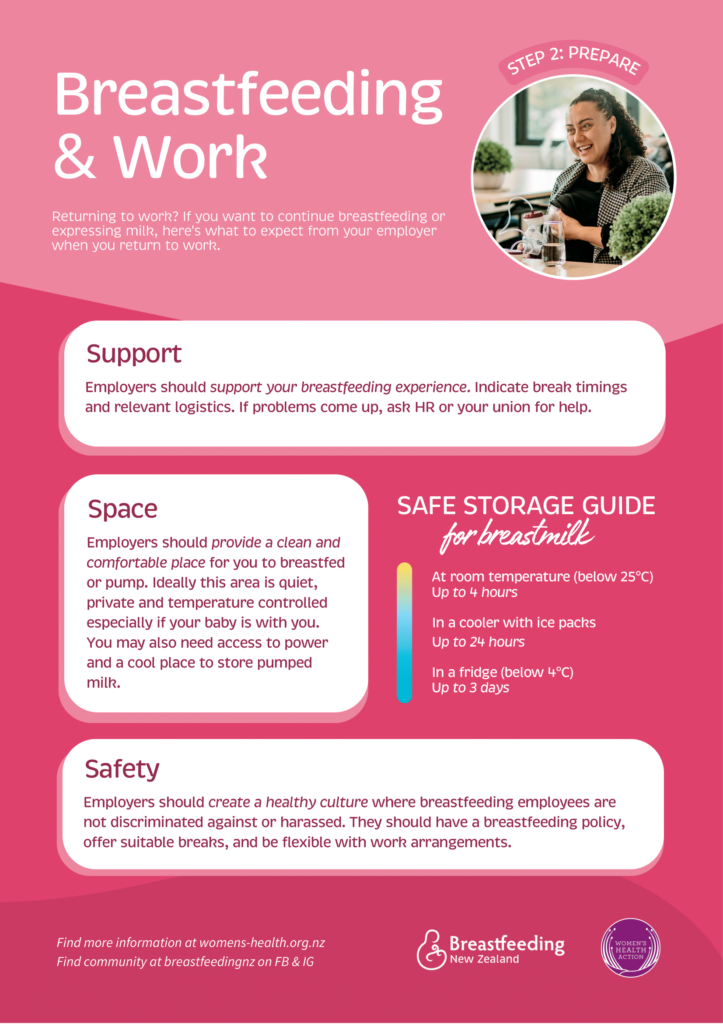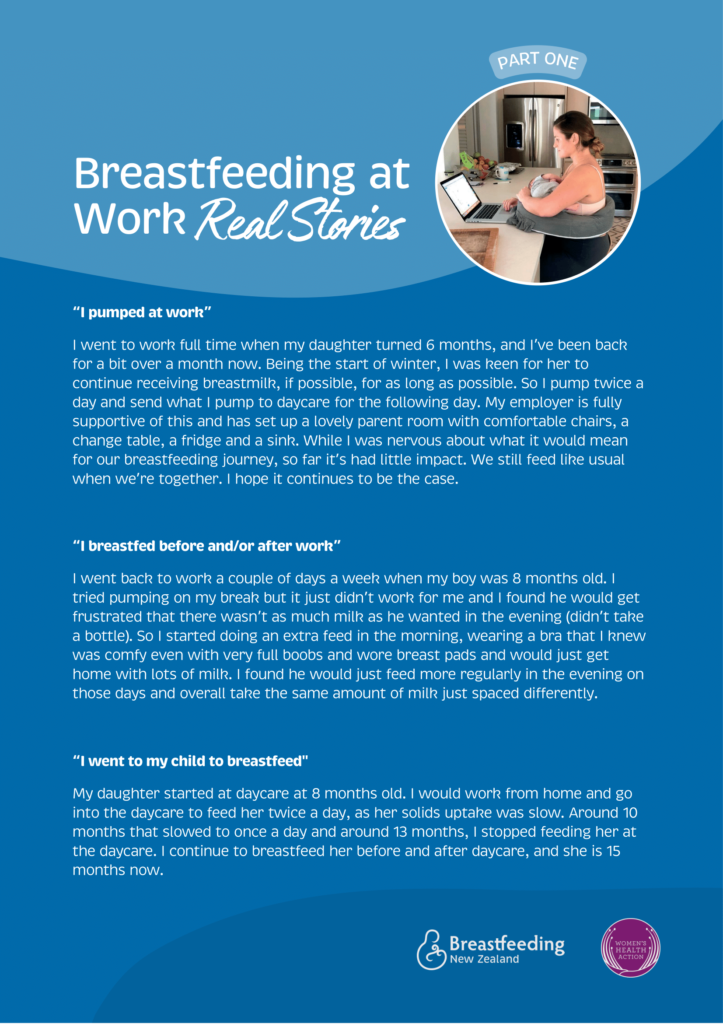
More parents are returning to work while continuing to breastfeed. Many workplaces now have family-friendly policies to support this, but for some employers, breastfeeding breaks and facilities may be new. If that’s the case, you may need to take the lead in starting the conversation.
Planning Ahead
There is no requirement to tell your employer that you plan to breastfeed or express on return. But planning ahead makes the transition smoother for everyone. Treat arrangements as flexible. What works at three months may be different at nine.
How to Advocate for Yourself
Know your rights.
Review the relevant legislation, your employment agreement, and any workplace policies on breastfeeding, flexible work, and parental leave.
Start Early
Talk with your manager or HR before parental leave and again before you return, so everyone has time to plan.
Find Common Ground
You both want you to be happy and productive at work. Frame the discussion as collaboration.
Frame Requests Positively
Instead of “there’s no breastfeeding room,” try: “I need a private space for about 15 minutes twice a day to express milk.”
Be Specific
Offer an estimate of what you’ll need. For example: “I expect to express three times a day for three months, then twice a day for about six months.”
Take Your Time
If you feel pressured, ask for time to consider options before agreeing.
Suggest Solutions
If your organisation hasn’t supported breastfeeding before, propose practical options that could work. Utilise our free templates and resources. While it is not your responsibility to educate your employer, directing them to support resources and learning my help support your experience and setting up what your need. You can find resources for your employer here
Keep The Conversation Open
Babies’ feeding patterns change. Review arrangements regularly and adjust as needed.
Tip:
If you have an HR person, an Equal Employment Opportunity (EEO) officer, or belong to a union, check existing policies with them before meeting your manager.
Practical Ways to Support Breastfeeding at Work
Use these ideas to help you and your employer create a supportive, flexible approach to breastfeeding at work.
- Talk with your whānau about how they can support you
- Request part-time or flexible hours, job sharing, or some work-from-home days
- Your partner or carer brings baby to you for feeds
- Meet baby nearby during breaks
- Go to where baby is (home, crèche, carer’s place) to feed
- Express and store breast milk at work for the next day
- Feed before and after work, and on days you’re not working
Preparing for Your Return-to-Work Meeting
About a month before you return to work, arrange a meeting with your manager to confirm the details below.
- Confirm where and when you can feed or express (private space, approx. duration and frequency)
- Agree on storage (clean fridge/labelled container) and hygiene arrangements
- Clarify break scheduling and any flexibility during busy periods
- Note who to contact if plans need to change
- Schedule a check-in after the first week and month to review what’s working
On return: Confirm the arrangements you agreed to and review them as your baby’s needs change.
Free Downloadable Support Resources
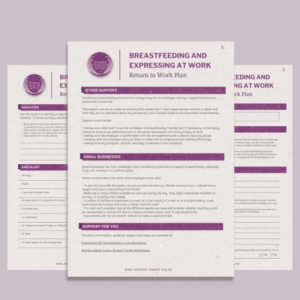
Use this collaborative plan to guide positive, practical conversations with your employer about infant feeding when you return to work.
About the plan:
Women’s Health Action’s Return to Work Plan is based on Employment New Zealand recommendations and current legislation.
It helps parents and employers create personalised, realistic arrangements that support both family and workplace needs.
How to use it:
Work through the plan together with your employer before you return to work.
Use it as a shared reference to confirm space, time, and flexibility for breastfeeding or expressing milk.
Download:
Return-to-Work Plan (PDF)
Breastfeeding at Work Resources
A set of practical resources to support our working whānau to breastfeed. This three-part series includes:
You can download each step individually or as a set of three. For more support and information about breastfeeding, check out Find Your Breastfeeding Support.